Engagement Patterns
Psychological Engagement, rather than Behavioural Engagement, produces learning. Use generative techniques to elicit psychological engagement.

Situation learning in real-world context
This Newsela exercise uses a real article reporting real-world events to teach literacy.
use rewards as feedback of progress and/or mastery
Khan Academy uses tokens and badges to reward learners for progress, completion, and assessment.


Focus on generative instructional methods that promote relevant psychological engagement
This Coursera lesson embeds a short quiz into a video to facilitate engagement.
embed learning into meaningful activity
This GSD Academy web development lesson is built around creating a playable video game.


create positive moods with aesthetic cues
Duolingo's Duo constantly provides affirming messages to learners.
Preserve motivation by offering learners autonomy over the pace and sequence of content, where appropriate.
Constructionist tools like Strawbees inherently preserve autonomy by offering endless options to solve a challenge. Strawbees lessons encourage learners to "go off-script".


leverage biophilia to evoke emotional connections.
This StudyCat game uses nature motifs to inform the design of characters and settings, as is common in children's apps.
Note: Dorian Peters talks about this in her book Interface Design for Learning. It seems common sensical, but I've not found experimental evidence for this.
Guide discovery and foster autonomy through experimentation and play
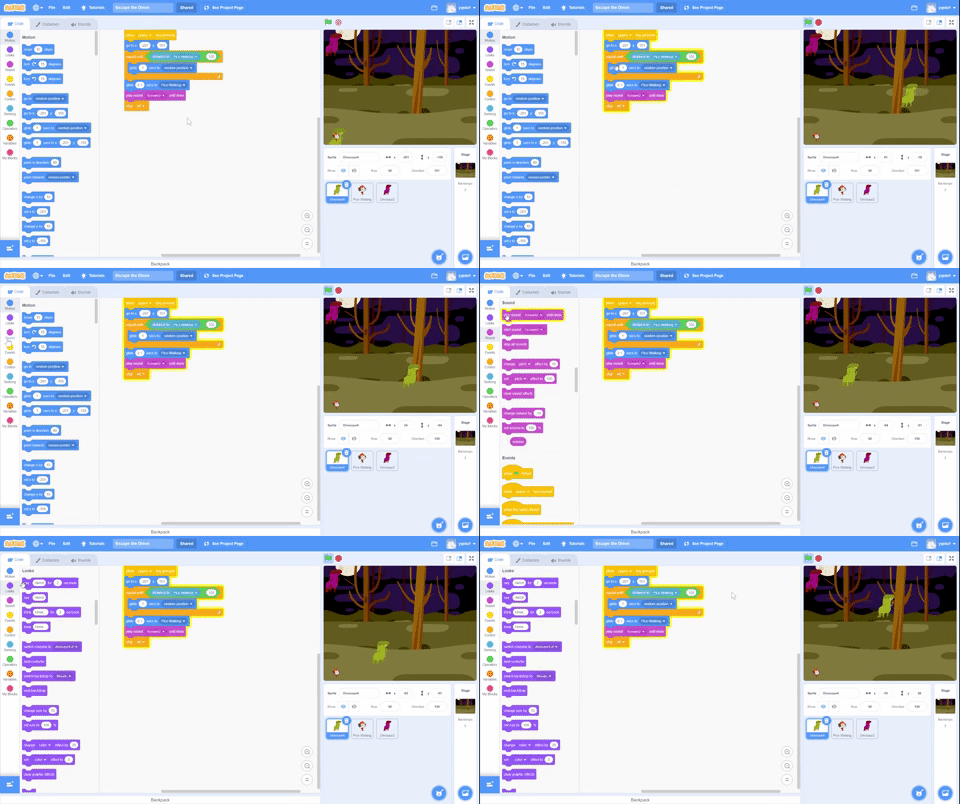
Scratch's block design inherently support experimentation. Players can click on any block and immediately observe its effect, making trial-by-error frictionless.

Introduce elements gradually, provide hints and access to examples to manage difficulty
You'll find this type of scaffolding in a lot of coding platforms. For a more unorthodox example, I'm going to evoke videogame tutorials, in particular, the Tutorial Campaign of Total War Warhammer 3 Prologue - which introduces new players to a vastly complex, sandbox game with hundreds of mechanics, units, resources, etc, with remarkable effect. This was done through creating a self-contained but rich, linear story. Interfaces are hidden and introduced to players one by one. (a very common feature in video game tutorials and criminally underused outside of gaming). Click image to read more.